MIA's Description
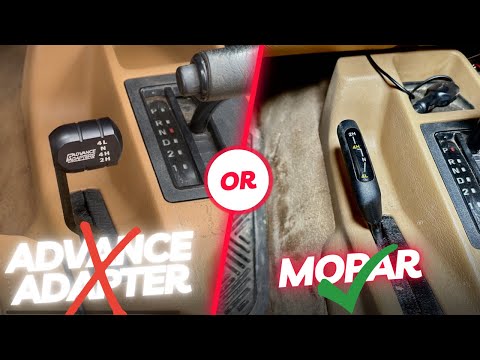
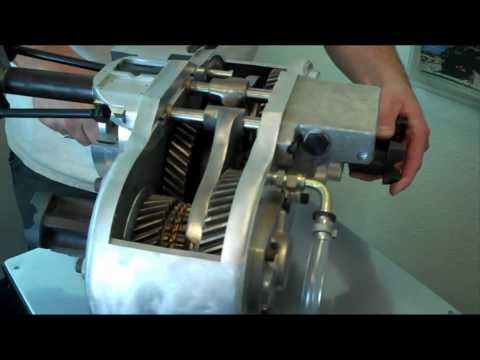
In 1980 Jeep introduced the rugged and dependable Dana 300 Transfer case. It would prove to be an incredible success. This lightweight compact unit set the bar for other transfer cases to follow. Even today many consider the Dana 300 as the best transfer case ever used by Jeep. The Dana 300 was the result of engineering advances put into play by the Dana Corporation. The Dana 300 was developed during a time when off-roading was gaining popularity, and there was a growing demand for more robust and quieter transfer cases. Prior to the Dana 300, Dana was limited to modifying and perfecting the Dana 18 and subsequent Dana 20. Improvements were clearly needed as Dana saw the writing on the wall to American needs and wants: Strength with Silence. Clearly this was not an easy task for Dana as the two don't necessarily go hand in hand. Development for the Dana 300 began in August of 1976. Engineers were focused on some key points while still maintaining certain parameters. These parameters were weight, size, centerline, strength, manufacturing costs and quiet running gears. Engineers submitted their final design changes for approval in July of 1978. Although not leaps and bounds from other transfer case designs like the Dana 20 or NP205, The concept models produced by Dana were "dead on" and destined for ultimate success. By 1979 the stage was set for the first introduction of the new helical geared Dana 300. The first candidates were the 1980 Jeep CJ and the I.H. Scout. One of the standout features of the Dana 300 is its cast iron construction, which provides excellent strength without excessive weight featuring a passenger-side front drive shaft. The rear output shaft was centered or in line with the transmission output shaft. New for the Dana 300 was a round, circular six-bolt front mating surface pattern. The previous Texas bolt pattern from the Dana 20 had been retired with the exception of the Scout Dana 300. The case was generally smooth with little webbing as seen with modern transfer cases. One unique design change was the 23 spline female input for the Dana 300. The previous Dana transfer cases were equipped with a coarse transmission output shaft having the transfer case input gear mounted and retained. The new 23-spline female input basically made the Dana 300 an isolated unit where the input rode on its own bearing and seal. The unique 23-spline female input design allowed for greater compatibility with various transmissions while isolating the input gear on its own bearing and seal. This not only improved reliability but also simplified maintenance. This input assembly was retained by a removable aluminum indexing retainer. The helical cut input gear was manufactured to accept the new input which had 31 male splines on it. The Dana 300 weighed in at approximately 85 lbs. The unit was clocked down at a 23-degree angle. The overall width was 16". The output shafts were 26 splines on both the front and rear outputs. The factory configuration used 1310 non-cv yokes front and rear. The first Dana 300 units introduced in 1980 measured approximately 10-1/2" in overall length. This was known as "The Short 300". In 1981 this length would increase to 12". The added length was not a result of a longer cast iron case as many are misled to believe. The difference was a design change to the rear nose cone area of the Dana 300. The short 300 was a factory with a nonadjustable fixed gear for the speedometer in the rear aluminum nose cone. This design proved difficult for calibrating the speedometer for tire changes or ring and pinion swaps. The newer Dana 300 used a longer rear output and aluminum nose cone. A removable speedometer drive with a replaceable plastic gear replaced the older non-serviceable design. This allowed the consumer to easily exchange his plastic gear for another with a different tooth count. The design change proved so successful that Jeep continues to use this basic design on a majority of their transfer cases even today. Jeep offered 4 different transmissions for use with Dana 300. These would include the SR4, T4, T5 and T176. The T176 was the strongest and shortest of these applications. The Dana 300's compact design and durable construction was accepted with huge fanfare. Not only was the transfer case stout but the case was significantly quieter than the Dana 20. The Dana 300 had other features adding even more respect for this unit. Obviously the 2.62 low range was the first appreciative offering. This was a significant improvement over the 2.03 previously offered by the Dana 20. The actual internal gear shifting design evolved from a sliding gear to a sliding clutch sleeve with fixed speed gears. The 300 was introduced with a single shifter for the transfer case. The unit shifted from top to bottom 4L-N-2H-4H. The transfer case had a large aluminum shifter base on the front of the transfer case where the single lever assembly was mated with two shift rails. Inside the shifter housing were interlock pills between the shift rails. The original shifter design was clearly not the best design for the transfer case and many feel Dana engineers may have contemplated offering the Dana 300 as a twin stick option. This however was never followed through. The aftermarket would take care of that and many other options. Jeep Dana 300s all use a 23-spline input. Some of the adapters we manufacture include a new Dana 300 input with a different input spline and other adapters retain the stock input. The various Dana 300 input shafts we manufacture include a 10 spline, a stock 23 replacement, a long 23 spline which is .750" longer spline engagement than stock, a 27 spline, a 21, 29, 31, 32 and 35 spline. Therefore, if you obtained a Dana 300 from a salvage yard, please verify the input spline. The aluminum index retainer incorporates a front seal to protect the transfer case fluid from entering the transmission. The transmission adapter housing normally has a seal that is installed with the open side towards the transmission. This seal can be omitted on transfer case adapter installations, provided a gasket or silicone seal is used in between the adapter and the transfer case. The original Jeep adapters have a small weep hole that is located between the two seals. This weep hole is an indicator that one of the seals has gone bad and needs replacing. We do not use this concept on the transfer case adapters that we manufacture. The Jeep Dana 300 has a stock rotation of approximately 35 degrees. All of the adapters we manufacture for this transfer case have the provisions for this rotation. Most adapters we offer have two sets of six adapter-to-transfer case mounting holes. The illustration (below) shows the correct holes to maintain this degree of rotation. The second rotation option is used for New Process transfer cases. With ground clearance being an issue or concern with some vehicles, we also offer a Dana 300 rotation kit that allows the transfer case to be clocked up higher to provide additional ground clearance. The rotation kit will require transfer case shifter handle modifications and possible floorboard modifications. Using this indexing plate with one of our adapters that uses a different spline count than the 23 spline will cause a loss of some spline engagement and may not be recommended. P/N 50-8604 - Fits transmission with a flush output shaft stickout (Jeep automatics and NV3550) P/N 50-8603 - Fits transmission with a .438" output shaft stickout (Jeep AX15 or TR4050) (Note: This adapter is not designed to flip the Dana 300 upside down.) All of the adapters we manufacture offer a support pad machined on the casting. In most cases, this pad will not line up with your original skid plate mounting slots. Jeep vehicles 1980-86, have a boxed-in frame that has the skid plate mounting holes embedded into the bottom of the frame rail. It makes it difficult to move the crossmember due to this enclosed frame. In most applications, we found that retaining the skid plate in the stock position and adjusting the mounting slots on the skid plate works the best. On longer transmission assemblies, it may be necessary to modify the skid plate for front driveshaft clearance or relocate and mount the skid plate further back on the frame rails using four of the six mounting holes. On some applications, a spacer between our adapter housing foot and our new rubber crossmember may be required. We offer a 2" spacer for such applications. We also offer a new support bracket that replaces your stock transmission rubber support. On most vehicles, we have tried to allow for proper clearance. However, we are unable to allow for this with some automatic transmissions. These applications will require the centerline of the drivetrain to be offset 1" to the driver's side, and you will be limited on your driveshaft diameter. The Dana 300 shifters are always supported off the front of the stock transfer case. On some of the truck 4-speed and NV4500 adapters, the shifter support and pivot shaft may need to be modified to fit to these transmissions. Most applications will not require.